
Artificial intelligence has moved far beyond the realms of science fiction. Today, it quietly powers the apps we use, the entertainment we consume, the navigation systems we rely on, and the healthcare we increasingly trust. From banking to fitness tracking to virtual assistants, AI has woven itself into every layer of modern life. But one of the most impactful, yet least talked about, areas where AI is creating a silent revolution is hair loss diagnosis and planning.
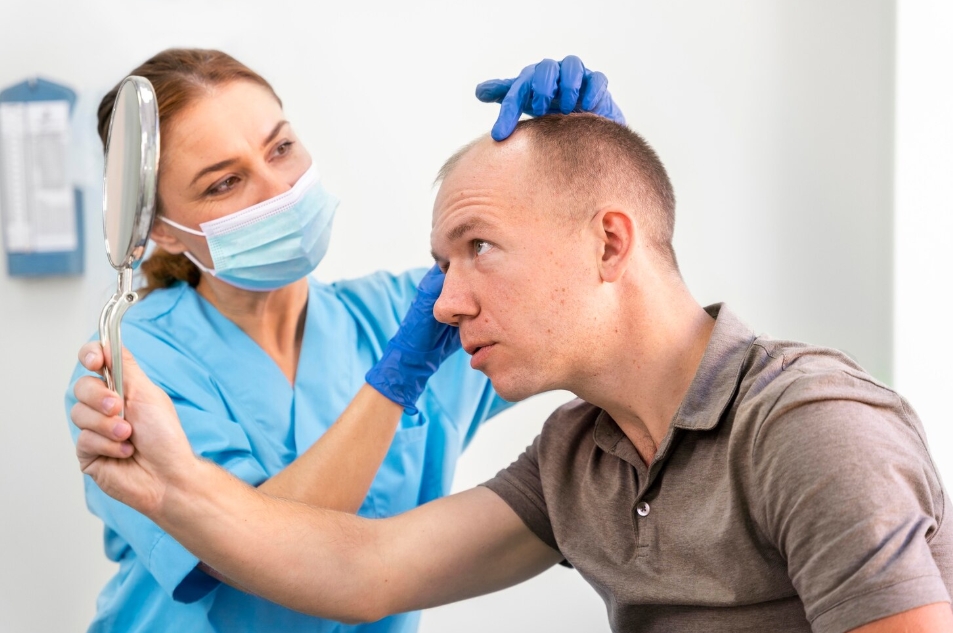
For decades, diagnosing hair loss has been largely dependent on a doctor’s visual judgment, magnification tools, and patient history. While experienced specialists can often recognise patterns quickly, the process still leaves room for subjectivity. Two doctors might interpret the same scalp differently. Patterns of thinning might be overlooked in certain lighting. Early miniaturisation, one of the first signs of long-term hair loss, may go unnoticed until it becomes more obvious.
AI changes this entirely. It doesn’t rely on guesswork or memory, or subjective evaluation. Instead, it introduces data-driven clarity, letting both the doctor and the patient understand exactly what is happening beneath the surface. With AI, the diagnosis becomes earlier, the predictions become more accurate, and the treatment plans become more personalised than ever before.
AI Makes Invisible Hair Loss Visible
One of the biggest advantages of AI in the hair industry is its ability to detect changes long before the human eye can. Modern AI-powered imaging devices capture extremely high-resolution photos of the scalp. Instead of simply showing strands of hair, these images reveal microscopic details such as follicle density, hair shaft diameter, the proportion of thick vs. thin strands, early miniaturisation trends, and even mild scalp inflammation.
These are the subtle signs that predict future hair thinning. In many cases, AI can pick up early androgenetic alopecia months, or even years, before it becomes clearly visible. This is incredibly valuable because early intervention significantly improves long-term outcomes. When you catch hair loss early, you protect more hair, slow down deterioration, and often avoid the need for larger restoration procedures later.
This early detection has made AI an invaluable tool in clinics aiming to provide the most precise care. It’s one reason patients researching the best hair transplant in Mumbai find clinics like Bloom Hair Transplant leveraging technology rather than relying only on traditional methods.
Predicting Hair Loss With Mathematical Accuracy
Once AI captures scalp data, its role doesn’t end there. One of its greatest strengths is the ability to analyse patterns and predict future progression. By feeding in factors such as age, family history, hormonal status, lifestyle habits, medical conditions, and current follicle quality, AI can map out how hair loss is likely to evolve.
This predictive power allows doctors to take proactive steps rather than reactive ones. Instead of waiting for hair to fall, clinics can suggest preventive measures, strengthen existing follicles, and slow down the rate of thinning. It also helps determine when a patient may genuinely benefit from a transplant and when non-surgical methods may be sufficient.
Patients appreciate this clarity. Knowing what to expect removes uncertainty and fear. It also prevents unnecessary treatments, helping people make more informed decisions about their long-term hair restoration strategy.
Tracking Progress Without Guesswork
In traditional consultations, progress is usually assessed through photographs taken every few months. But lighting, angles, and camera settings often differ, making subtle changes hard to judge. AI eliminates this inconsistency. It compares images pixel-to-pixel, measuring microscopic differences in density, growth rate, hair thickness, and scalp visibility.
This means you can see exactly how a treatment is working, with hard data rather than assumptions. Patients undergoing PRP, medication, or a hair transplant find this incredibly reassuring. It creates a transparent, trackable journey where they can observe improvements that might be too small to notice in the mirror but are significant at the follicular level.
This is also why advanced clinics, including Bloom Hair Transplant, integrate AI tools into their consultation process. When the technology shows results objectively, patients feel more confident in the treatment plan.
Personalising Every Step of the Treatment Plan
Hair loss is not a one-size-fits-all condition. Two people with similar thinning on the hairline may have completely different underlying causes. One may be dealing with genetic DHT sensitivity, while another may have nutritional deficiencies or chronic stress. AI helps doctors detect these patterns early by analysing data from multiple angles.
Based on this, AI helps determine:
- The ideal hairline design for the patient’s face shape
- Areas that need priority
- Zones with strong donor density
- Expected graft survival rate
- How many grafts will create natural density?
- Whether the patient should begin medical therapy first
- Which treatments are likely to be most effective
In complex cases, such as diffuse thinning, unbalanced hairline shapes, or early female-pattern hair loss, this kind of precision is invaluable. Patients looking for the leading hair transplant in Mumbai often choose clinics using AI because they know the treatment plan will be tailored, not generic.
Early Detection Beyond Genetics
One of the most underrated strengths of AI is its ability to identify the type of hair loss, not just its severity. Many people assume all thinning is genetic, but that’s not true. AI can recognise patterns associated with hormonal shifts, thyroid disorders, vitamin deficiencies, stress-related shedding, autoimmune reactions, and PCOS-linked thinning in women.
This helps doctors treat the cause rather than simply the symptoms. If the pattern suggests nutritional causes, the patient can correct deficiencies before hair loss worsens. If inflammation is detected early, targeted therapies can prevent future follicle damage. If stress-induced patterns show up, lifestyle changes and stress-management treatments can be introduced.
AI also removes the stigma and guilt people often feel. When people see clear visual evidence that their thinning is related to biological or environmental triggers, they stop blaming themselves and start addressing the root issue.
AI Improves Patient Confidence and Decision Making
For many people, hair loss brings anxiety, embarrassment, and emotional stress. The uncertainty often feels worse than the thinning itself. AI introduces a level of clarity and explanation that helps restore confidence.
When patients can see:
- The exact location of miniaturisation
- A map of their follicle health
- A predicted timeline of progression
- Visual proof of improvement
They feel empowered. They understand their condition, their options, and their expectations. This also builds deep trust between the doctor and patient, because decisions are based on visible facts, not assumptions.
This shift in confidence is one of the reasons clinics using AI are emerging as the preferred choice for modern patients seeking hair restoration in metro cities.
Why AI Matters for the Future of Hair Restoration
The role of AI will continue to expand as technology improves. Soon, we may see:
- AI-guided robotic transplant systems
- Fully automated density analysis
- Scalp 3D mapping
- Personalised long-term hair preservation plans
- Genetic-based prediction models
- AI-assisted donor area optimisation
As AI becomes more sophisticated, hair restoration will only become more precise, natural-looking, and long-lasting.
Clinics such as Bloom Hair Transplant are early adopters of these systems, not as a trend, but because transparency and accuracy genuinely improve patient outcomes. And as more people research the best hair transplant in Mumbai, AI-guided diagnostics are increasingly considered essential, not optional.
AI For Hair Problems
AI is not here to replace doctors. It is here to enhance them. Hair loss diagnosis is becoming smarter, earlier, and more accurate thanks to artificial intelligence. By combining human expertise with powerful algorithms, we now have a future where treatment is highly personalised, predictable, and rooted in measurable data.
For patients, this means better results, fewer uncertainties, and a deeper understanding of their hair health. And for the industry, it marks the beginning of a new era, one where technology and medicine work hand-in-hand to deliver outcomes that were unimaginable just a decade ago.